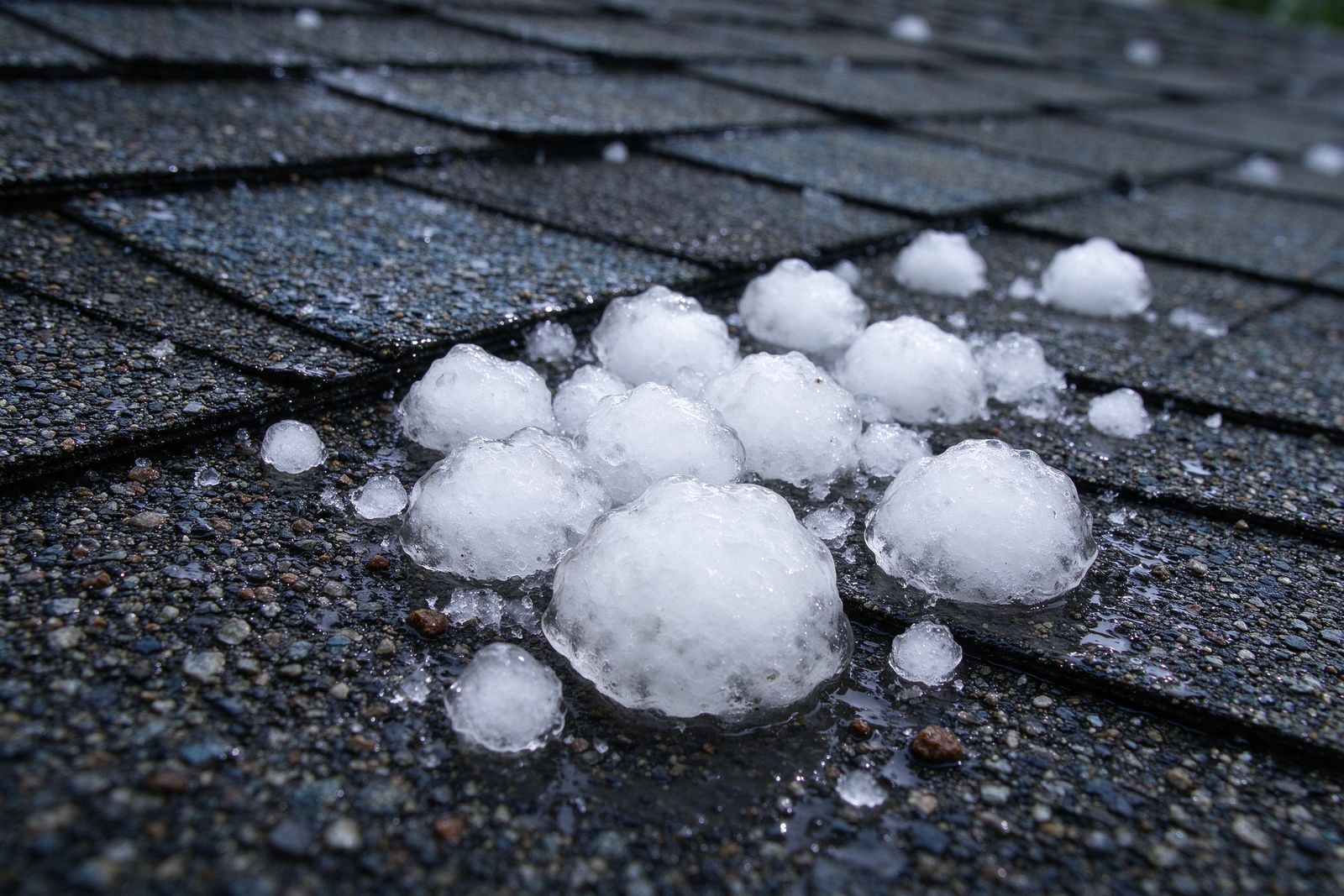
Hail is the reason most Parker roofs get replaced early. A single afternoon cell can drop stones that bruise every slope on a street, and the damage is often invisible from the driveway. The roof looks fine for a year, then granules wash into the gutters and the shingles start to fail.
This guide walks through what usually happens after a storm, in plain terms. It is general information, not insurance or legal advice. Your policy and your insurer decide coverage, and the rules change, so treat every step here as something to confirm.
What Hail Actually Does to a Roof
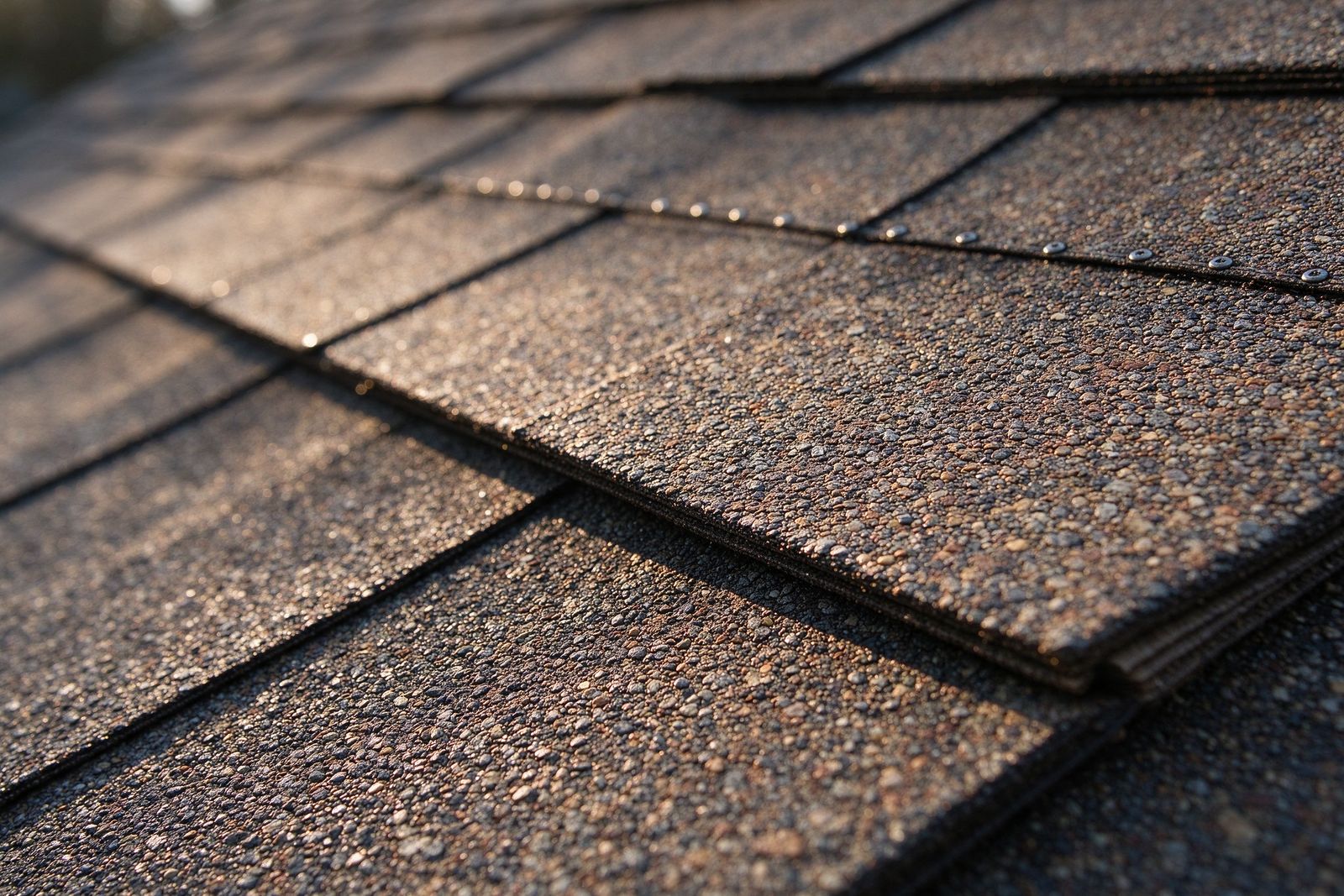
On asphalt shingles, a hit crushes the mat beneath the granules. Inspectors call it a bruise: press on it and it feels soft, like a bruise on fruit. The granules around it may be gone, leaving a dark spot. Over the next seasons sun and water work on that spot until the shingle cracks.
Other materials fail differently. Concrete and clay tile crack or chip at the edges. Wood shakes split along the grain. Thin metal dents; whether a dent is "cosmetic" or functional damage is a policy question, and some policies exclude cosmetic damage to metal entirely. Soft metal on every roof (vents, flashing, gutters) dents easily, which is why adjusters look there first.
| Material | Typical hail sign | Where to look |
|---|---|---|
| Asphalt shingle | Soft bruise, missing granules, cracked mat | Ridge caps and the slopes facing the storm |
| Concrete or clay tile | Cracks, chipped corners, broken pieces | Hips, ridges and tile edges |
| Wood shake | Fresh splits with light-colored wood inside | Open faces of the shakes |
| Metal panel | Round dents, chipped coating | Panel flats in low raking light |
| Soft metals | Dents on vents, gutters, downspouts | Roof vents, gutter tops, AC fins |
Document Before Anyone Climbs
The strongest claim file starts in the first hour, from the ground. You want proof that hail fell at your address on a specific date, and proof of what it hit. Use the checklist below; it saves in this browser so you can finish it over a couple of days.
How a Hail Claim Usually Moves
Insurers differ, but the sequence below is common. Knowing it lets you see when someone is trying to skip a step.
- 01
Report the loss
Call or file online with the storm date. You get a claim number; put it on every document from here on.
- 02
Adjuster inspection
The insurer's adjuster inspects the roof and exterior. You can have your own roofer there to point out damage. Ask how many hits per test square they found.
- 03
Estimate and first payment
The insurer issues a written estimate. Replacement cost policies often pay the actual cash value first and hold back depreciation until the work is done.
- 04
Supplements
If the roofer finds items the estimate missed, such as code-required drip edge or extra decking, those go to the insurer in writing with photos.
- 05
Work and final invoice
After the permit and HOA steps, the roof is replaced. The final invoice goes to the insurer to release any held-back depreciation.
Deductibles, Depreciation and the Check
Two policy details shape most of the money conversation. First, the deductible. Some homeowner policies in Colorado carry a separate wind and hail deductible, and some of those are a percentage of the dwelling coverage rather than a flat dollar amount. A percentage deductible on a large home can be significant. Find the number before you file.
Second, how the roof is valued. A replacement cost policy aims to pay what it costs to replace the roof, but often in two parts: actual cash value up front, then recoverable depreciation once you prove the work is done. An actual cash value policy pays the depreciated value and stops. Some newer policies settle roofs on a schedule based on age. Your declarations page tells you which one you have.
Storm Chasers and Door-Knockers
Big hail days bring crews from out of state within hours. Some do decent work. The problem is the business model: high-pressure door sales, a signature that same afternoon, and a company that may be gone before your warranty matters.
The messy middle: the "free inspection" signature
The common failure point is a single page offered on the porch. It might be called an inspection agreement, a contingency agreement or an authorization. Read carefully: some of these quietly commit you to that company for the whole job if the claim is approved, or assign insurance benefits to them. Our rule is simple. Take the card, not the pen. If an inspection is truly free, it needs no signature.
Red flags worth walking away from:
- An offer to "cover," "absorb" or "work with" your deductible.
- Pressure to sign today because "the insurance window is closing."
- A request for large payment before materials arrive.
- No local address, or an address that turns out to be a hotel or a mailbox.
- A promise of what your insurer will pay. Nobody but the insurer can promise that.
Colorado Rules Worth Knowing
Colorado has a specific law on residential roofing contracts, found in the Colorado Revised Statutes, Title 6, Article 22. In general terms, it requires a written contract with certain disclosures, gives homeowners a window to cancel after an insurer denies a claim in whole or in part, and bars roofers from paying, waiving or rebating your insurance deductible. The permits, HOA and contract guide covers this in more depth.
If hail hit your roof, the next question is usually what to put back. The Class 4 impact-resistant shingle guide explains what a higher rating buys you, and the roofer hiring guide lists the questions to ask before anyone tears off a single shingle.
Questions Parker Homeowners Ask
Should I call my insurer or a roofer first?
Read your policy first so you know the deductible and the reporting deadline. Many homeowners then have a roofer they chose inspect, so they know whether the damage likely exceeds the deductible before filing. Either order can work; what matters is that no one signs anything that hands over control of the claim.
Will filing a hail claim raise my premium?
That depends on your insurer, your claim history and current state rules, and it can change. Ask your agent directly and get the answer in writing. This guide cannot predict any insurance outcome.
Can a roofer handle the claim for me?
A roofer can document damage, attend the adjuster visit and point out items the estimate missed. Negotiating the claim for you is a public adjuster role, and in Colorado a contractor generally cannot act as the public adjuster on the same job. Verify current law before relying on that.
What if the adjuster says there is no hail damage?
Ask for the estimate and photos in writing, then ask your insurer how to request a re-inspection. Some homeowners add a second opinion from an independent roofer or hire a licensed public adjuster. Keep everything in writing.