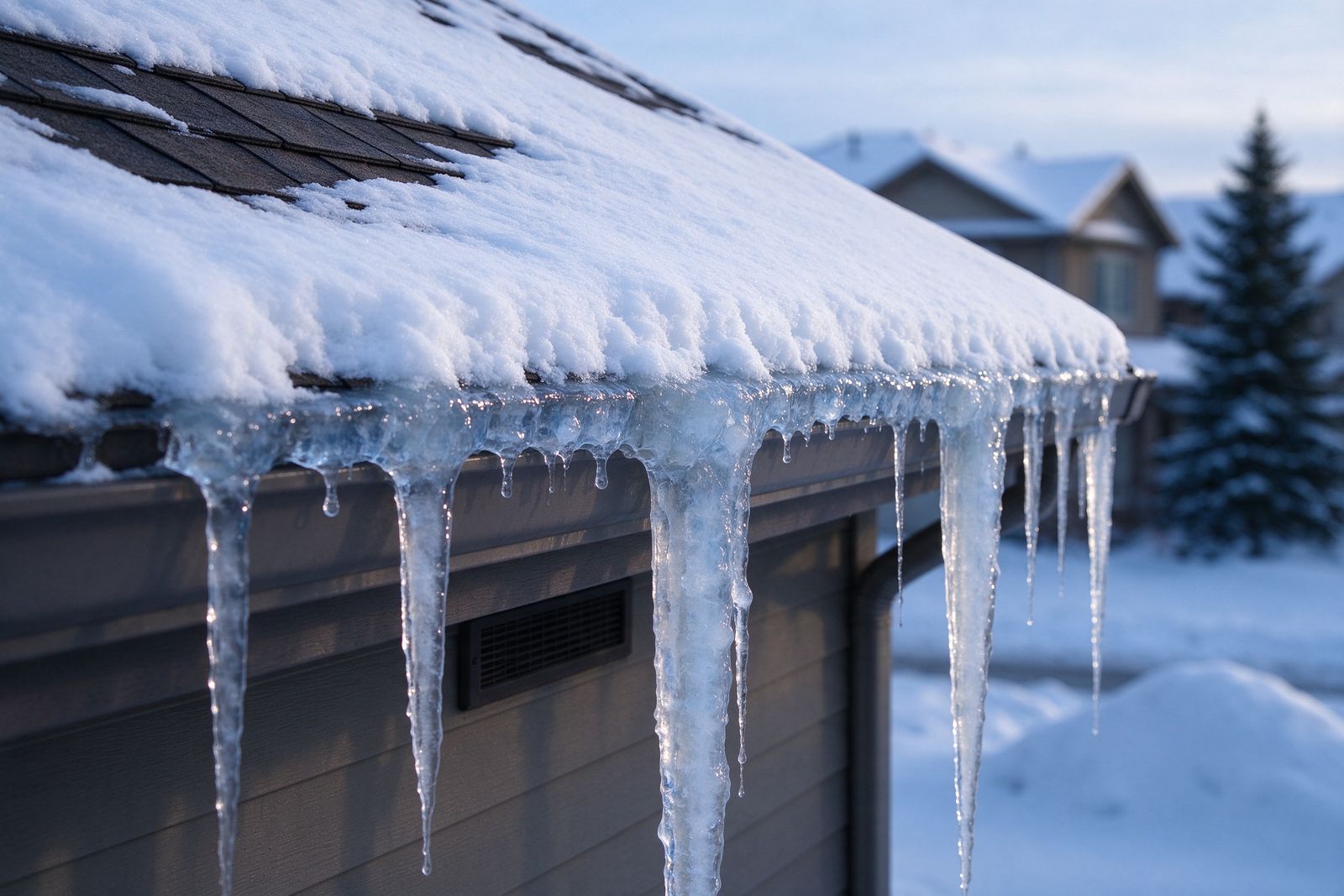
An ice dam is a ridge of ice along the edge of the roof that holds back melting snow. The trapped water has nowhere to go but sideways and up, under the shingles, into the wall or the ceiling below. Most homeowners first notice it as a brown stain near an exterior wall in February.
Why Ice Dams Form on South Metro Roofs
The recipe is snow on the roof, a roof deck warmer than freezing above the living space, and an eave that stays cold because it hangs out past the warm walls. Parker supplies all three. Storms often leave a few inches, the sun comes out hard the next day, and nights drop well below freezing. North-facing slopes and valleys that see little sun tend to keep their ice longest.
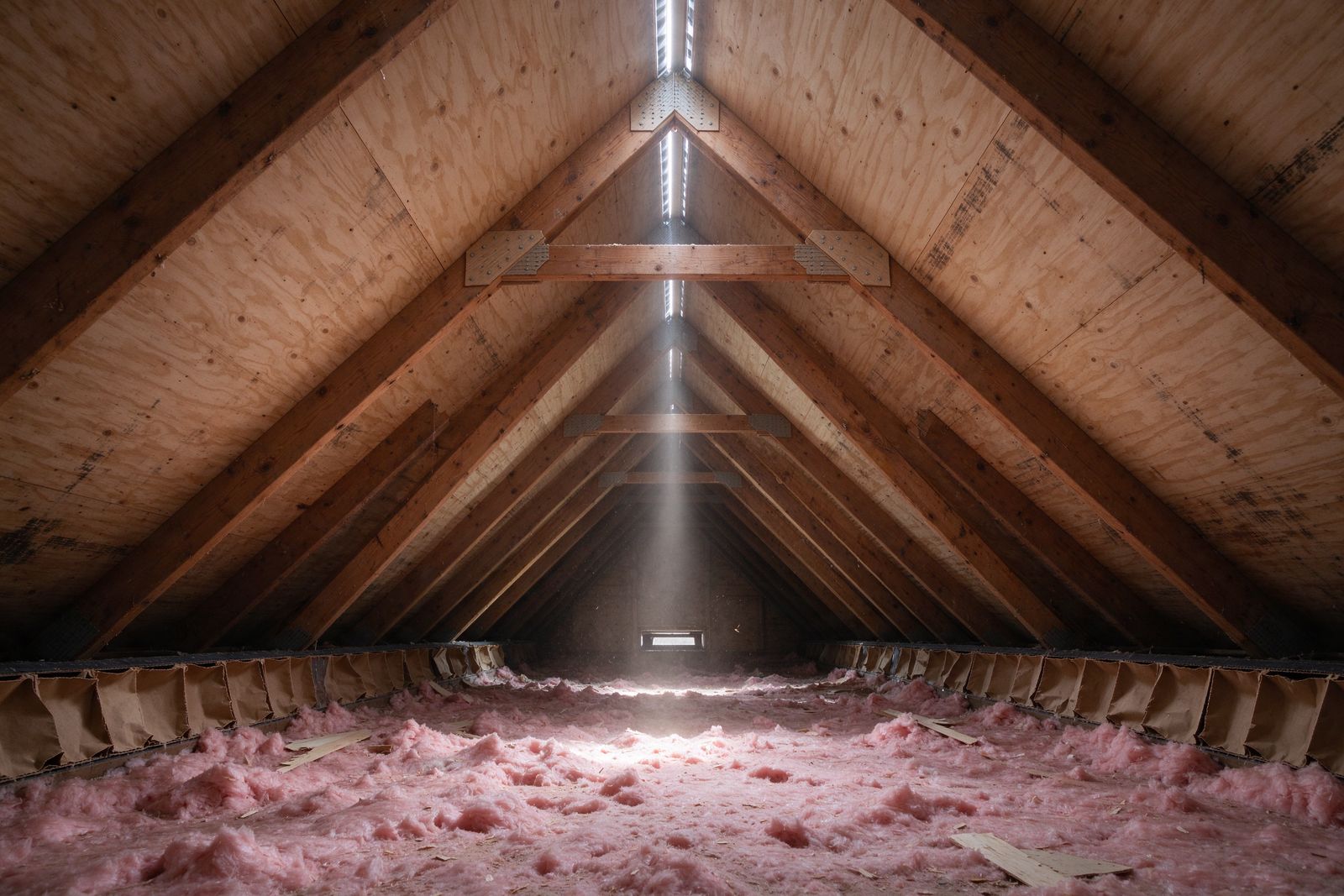
Heat in the attic is the part you control. It leaks up from the house through gaps around light fixtures, bath fans, the attic hatch and plumbing chases, and through thin insulation. A warm attic warms the deck, and the deck melts snow from underneath.
Four Steps From Snow to a Wet Ceiling
- 01
Heat.
House air leaks into the attic and warms the roof deck above the living space.
- 02
Melt.
Snow melts from underneath and water runs down under the snow blanket.
- 03
Refreeze.
It reaches the cold overhang and freezes. Each cycle adds to the ridge.
- 04
Backup.
New melt pools behind the ice and works under the shingles into the house.
How Attic Ventilation Is Supposed to Work
A vented attic is meant to stay close to outdoor temperature. Cold air enters low, through soffit or eave vents, and leaves high, through ridge or roof vents. That flow carries off heat and moisture. Baffles at the eaves keep insulation from blocking the intake path.
The building code commonly used across Colorado (the International Residential Code, as adopted locally) sets a minimum amount of net free vent area, often expressed as a ratio of the attic floor area, with a lower ratio allowed when certain conditions are met. Your town or county adopts and amends the code, so ask the building department which version applies.
| Part | Job | Common problem |
|---|---|---|
| Soffit or eave intake | Lets cold air in low | Painted shut, blocked by insulation, or never cut open |
| Baffles | Hold a clear air path over the wall plate | Missing or crushed |
| Ridge or roof vents | Let warm, moist air out high | Mixed exhaust types short-circuiting each other |
| Air sealing | Stops house air reaching the attic | Open top plates, unsealed can lights and hatch |
| Bath and kitchen fans | Move moisture outdoors | Ducted into the attic instead of outside |
A Winter Attic Check You Can Do
On a cold morning, take a flashlight up the attic hatch (only if you can stand safely on framing) and work through this list. It saves in this browser.
Fixes That Last
The order matters. Air seal first, then insulate, then make sure ventilation is balanced. Doing it backwards (piling insulation over leaky gaps, or adding exhaust fans) treats symptoms.
During a reroof, many local codes call for an ice barrier membrane from the eave edge up past the inside of the exterior wall line. Ask your roofer what your jurisdiction requires and what they plan to install. The materials guide covers the other layers that belong under any roof.
If You Have an Ice Dam Right Now
- Use a roof rake from the ground to pull snow off the lower few feet of the roof. Do not climb an icy roof.
- Do not chip ice with a hammer or axe. It damages shingles and gutters.
- Catch drips inside, move belongings and photograph the stains for your records.
- Once it melts, have the roof and attic inspected and decide whether it is a repair or a replacement.
Questions Parker Homeowners Ask
Are icicles always a sign of an ice dam?
Not always. A few icicles can form on any roof. A thick ridge of ice along the eave, water stains on the soffit, or wet spots on the ceiling near exterior walls are the signs worth acting on.
Will heat cables fix ice dams?
Heat cables can keep a channel open so water drains, which helps in a problem spot. They do not fix the heat loss causing the melt, they use electricity, and they need to be installed to the maker's instructions. Treat them as a patch.
Can I add more roof vents to fix it?
More exhaust without enough intake can pull conditioned air out of the house and make things worse. Ventilation has to be balanced, and air sealing the attic floor usually comes first.
Is a little frost in the attic normal?
Frost on nail tips or the underside of the deck on a very cold morning suggests warm, moist house air is reaching the attic. It is a sign to look at air sealing, bath fan ducting and ventilation.